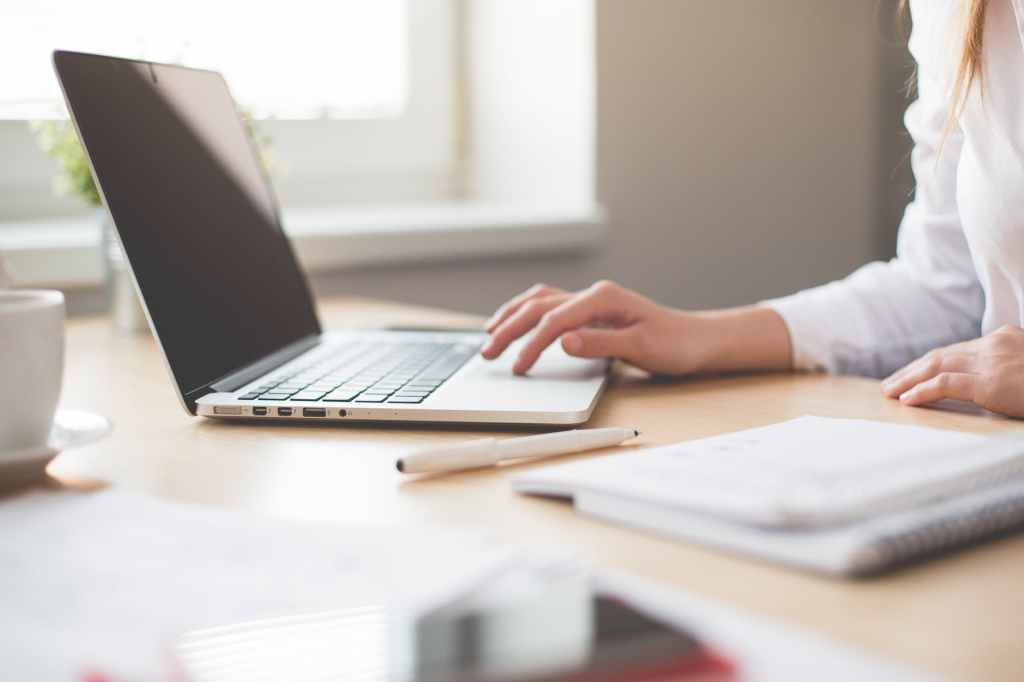
During the pandemic, employers quickly learned something; A LOT of jobs can be done from home.
If employers retain working from home as an option, it could remove barriers to employment for disabled people whose access requirements would be put in the “too hard” basket if they needed to work on site.
But we’ll need to be wary of the downsides, too.
As NSW began to ease lockdown restrictions our new Premier said, “We need to get back to the way life was before”. Personally, I’d like to see us aim higher.
Before the first round of lockdowns, about 42% of people on Newstart were disabled people. It’s probably a lot more now.
In recent years, many disabled people of working age, like me, have been refused the Disability Support Pension (DSP).
The Australian government argues that we have the capacity to work. Many of us would be happy to do so, in suitable jobs.
Unfortunately, in my personal experience, there just aren’t enough employers with the capacity and the will to actually employ us.
One of the issues that gets in the way for me is physical access.
As a user of a power wheelchair, I find a staggering number of workplaces (as well as shops and other places) inaccessible, not to mention my closest train station.
The COVID crisis forced, employers to recognise just how many jobs can, in fact, be done from home.
For me, working from home makes things easier in a lot of ways. I save on travel time and don’t need to hope that the ramp on the bus is working or that there’s enough room for my chair.
If it rains, I can enjoy watching it roll down the window while I remain warm and dry. I don’t need to spend money on work clothes or time ironing them (a massive saving – I’m a terrible ironer.)
No need to pack lunch. At home, I know I can use the bathroom and the kitchen without a problem.
It’s also nice and quiet, so I can use text-to-speech to give me a decent typing speed (providing the software I’m using is compatible and I don’t have to speak on the phone while I type).
As NSW began to ease lockdown restrictions and people were once again able to eat in cafes and drink in pubs, our new Premier said, “We need to get back to the way life was before”.
Personally, I’d like to see us aim higher.
Wouldn’t it be great to learn from our experience during the pandemic and find a better “normal” than the one we had before? One where disabled people are more included in the workplace?
If the option to work at home opens up more opportunities for disabled workers, then it will enable us to create more economic demand for access to places like shops, restaurants, theatres and bars.
That’s hard to do while living on below poverty level payments like JobSeeker and the DSP. More money in the pockets of disabled people would motivate businesses to change. When going out becomes more possible for disabled folks and people encounter us in social spaces, inclusion becomes less exceptional.
Employers would become open to employing more of us.
The community might even get used to having us around and be a bit less inclined to tell us how inspiring we are just for doing something as ordinary as leaving the house.
But working from home isn’t ideal..
I live in a one bedroom apartment. There’s no separate study or dedicated workspace.
I was working a few days a week during lockdown (from the kitchen bench) before I was put off.
The job was casual, so I wasn’t surprised to lose it.
I was disappointed, but it was a relief not to have to work at home while my husband was here, unable to work in his retail job.
Now that he’s gone back to work, working at home is ok, for me, but it’s still not great because if he’s home sick, or takes a day off, he’ll be in my workspace, not just his home.
Working at home also means you don’t interact as much with your workmates.
Clear and effective communication is much harder without all the clues that we get face to face from body language, facial expression and tone of voice.
Even video calls are a poor substitute.
There are no kitchen catch-ups.
There’s no one to say “good morning” to or ask a quick question of, or chat to about what you did on the weekend, unless you schedule those things – which can be a bit stilted.
You also can’t pick up tips about how to do your job better by observing how other people do theirs or overhearing other people’s comments about what’s happening.
Those things can be disadvantages for anyone.
For people with disability, I’m concerned that working from home could become the default position and mean that inclusion stalls.
For people with disability, I’m concerned that working from home could become the default position and mean that inclusion stalls.
People with disability work from home, so we don’t need accessible workplaces.
If disabled people work from home, as the default, do we get included in Friday night drinks or farewell lunches?
Does the possibility of disabled people working at home put us once again out of sight and further out of mind?
If you’re a disabled person who isn’t able to work from home or doesn’t want to, does that increase your disadvantage even further?
Does it rob disabled people and our co-workers of some of the advantages of working together in terms of normalising inclusion?
Could that lead to fewer disabled people being employed?
I guess we’ll have to wait and see.
The COVID crisis might have opened the door to employment a little wider to some disabled folks.
Things are not looking as promising as they might have, though.
Looking at job advertisements in the last few weeks, quite a few of them seem to offer a combination of working from home and working on site – so the workspace would still need to be accessible and somewhere you could travel to in a reasonable time.
It looks like working entirely from home might still be unusual – something you need to negotiate, if it’s your strategy to overcome access barriers.
Whatever happens, the pandemic has made its mark on how people work, and some changes will remain. Which ones are you excited about or wary of? Tell me in the comments.
If you appreciate this article and want to support Rolling Through, please, give it a Like, and share it on social media. You can also visit my Home page to subscribe for email updates and donate to keep me rolling!
 Rolling Through
Leave a comment