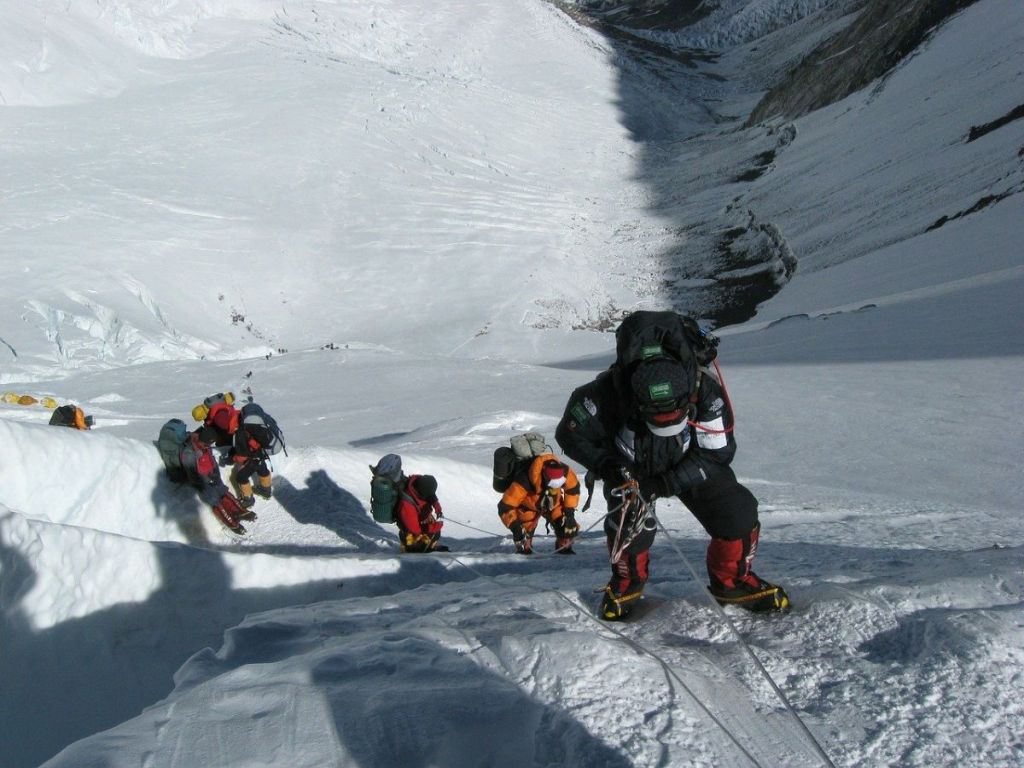
What do mountaineers and disabled people have in common?
Yes, you did read that right and, no, it’s not a riddle.
The answers could equip you to deal with your own life challenges.
Mountaineers and disabled people live life differently to most – one group by the roll of the dice, the other by choice..
Both groups are definitely considered unusual – outside the boundaries of normal.
In some respects, we’re poles apart – mountaineers who head for Everest and K2 are super fit and physically capable, right?
While some disabled people are also incredibly fit, (like champion Golden Slam winner, now Australian of the year, Dylan Alcott) the fact remains that we are physically disabled.
Mountaineers and physically disabled people share the experience of facing challenges that are big, sometimes scary and often unexpected.
Ever had any of those?
Our experience can help you face them.
1. Making the attempt
George Mallory can probably be called the original extreme sportsman. He made several attempts in the 1920s to climb Mount Everest, finally losing his life on the mountain. When asked why he wanted to climb Everest, he reportedly replied, “because it’s there”. The fact that he expended so much time and energy pursuing his goal, makes it clear that he wasn’t being flippant. He saw it as something that needed to be done. It was a challenge and succeed or fail, Mallory felt compelled to take it on.
I was born with cerebral palsy. My life and my disability are inseparable. My disability has always been “there”. For many people it’s mysterious and almost exotic. For me, it’s just the way life is – it’s normal. It is a bit like a mountain, presenting a challenge – a challenge that living my life compels me to address. I have less choice about it than a mountaineer. I didn’t ask for it. I can’t turn my back on it. But I engage with it for the same reason Mallory offered – because it’s there.
2. Taking a different approach
Most people will never climb Everest – or even want to. That’s understandable. Even with years of training and experience, it remains a huge challenge. It requires dedicated training to deal with the physical and mental demands of the climb.
Not everyone gets as far as even finding out whether their body is capable of mountain climbing. They guarantee that they’ll never experience the exhilaration of the climb or the spectacular view at the top. They start from the assumption that they can’t do it and they never try. They quit before they start.
Some people expect disabled people to respond to our disabilities in the same way.
Disabled people are, by definition, at a disadvantage. There are people who make all kinds of unchecked assumptions about the impact that has on our lives. They imagine the pitfalls they think we face and how difficult our lives must be. They seem quite sure that they could never cope in the same situation. They seem to expect us to quit before we start.
I’ve had people in the street give me looks of admiration or shake their heads in pity and disbelief simply because I was walking along on a pair of crutches.
When someone asked me what brought me to her workplace and I told her I was one of her new colleagues, she responded with surprized congratulations, mingled with shock. It wasn’t the response she expected. Her expectations of disabled people didn’t allow for one to be working alongside her.
The fact is, people who live with disability don’t all decide to quit before we start. A lot of us decide instead that we will give it a go and see what happens. We go for the experience. You never know where you’ll end up. It could be somewhere good.
Realistically, the people who shudder at the thought of even getting to Base Camp in Nepal will probably still face some serious challenges during their lives that they can’t avoid. They might lose a job, experience the breakdown of a relationship or live through a flood. Those things are hard and some of them change your life forever, but they’re usually not the end of you.
After the initial shock, there’s grief, and then eventually most people start to look for ways to deal with the situation they’re in. Friends and family rally around to help. We expect people to make it through. For some reason, a lot of non-disabled people seem to think that disability is different – that it’s so overwhelming it’s impossible to deal with.
Living with disability can be really tough but, like mountaineers, and ordinary people, most people with disability make the attempt. It’s impossible to reach the summit if you never leave Base Camp.
3. Preparing and expecting the unexpected
If you want to climb Everest, you need training. You need to practise carrying a backpack of around fifteen kilos for long periods. You need to build good strength. It’ll take a lot more than 10,000 steps a day! You need a strong mountain climbing CV with demonstrated experience in using an ice axe, crampons, a fixed line, a climbing rope and all the other equipment required to climb a mountain as safely as possible.
You need physical endurance. Even for someone who’s fit and healthy, it’s a huge commitment to physical training to give yourself the best possible chance of making it to the top AND back down. You also need to book out at least three months in your diary. Acclimatizing to lower oxygen levels is a process that can’t be rushed.
You need to be prepared for mental challenges. Fear, loneliness and even boredom will be part of the experience – not just excitement and elation. You need to know how to respond to danger. You need to have done all this training and preparation before you even get to Base Camp. You do all this and still don’t know exactly what challenges you’ll face on the mountain.
Long periods of physical training are something people with physical disabilities are often familiar with. I didn’t learn to walk til I was about six. People without disability get there between eight and 18 months of age.
By the age of six, I’d already had more physiotherapy than most people will have in a lifetime. It was painful and frustrating and boring and time consuming. It was never fun. I remember being pushed, pulled and prodded into awkward positions. I don’t remember the therapists doing much to help me understand why it all had to happen. (I was a child, and it was the 1970s.)
While my brother was able to walk to school and ride his scooter around the streets with his friends, I was spending time with physios, working to get a bit closer to “square one” just to be able to move around under my own steam – and working hard.
As an adult, I’m relieved I learned to walk, even though it was a huge challenge. My walking has never been brilliant – though it was good enough to get me to the top of Sydney Harbour Bridge! (There’s a photo -somewhere.) I’m now 52 and I still live in a community that excludes you from A LOT if you can’t walk at all.
As a child, I wasn’t always convinced that the time, effort and pain I was going through was worth it. My Dad understood that, just as a mountaineer needs high motivation to prepare for Everest, I needed something that would grasp my imagination to give me motivation to learn to walk. He said that when I learned to walk, we’d go to Disneyland. When you’re a little kid, that’s the promise of heaven! It helped on those many days when I did NOT want to be exercising.

Learning to walk didn’t fix everything. In more recent years, I’ve developed injuries from years on crutches. I had to start using a wheelchair much of the time. I’m back to doing a lot of exercise to ensure I maintain some ability to walk and the independence it provides. I don’t know how much I can improve on where I’m at now or even maintain it, but now that I understand what’s at stake, I’m motivated.
4. Accepting the risks with no guarantees
No one knows for sure whether George Mallory made it to the top of Everest. His body was eventually found, frozen and preserved in the mountain he had devoted so much of his life to climbing. It’s unclear whether he was on his way up or down when he fell.
He wanted to make it to the top of the mountain and it’s nice to believe that he did – but regardless, he spent a huge amount of time and energy pursuing a goal that was really important to him. He experienced life on the mountain and faced its challenges. He either died having succeeded in reaching the summit or he died trying. Either way, he was doing what mattered to him
When you set out to climb Everest, even today, you don’t know how far you’ll get. Not everyone makes it to the summit or indeed, makes it safely home. You’re taking on an inhospitable environment. Training and preparation improve your chances of ascending the summit with a safe return but they can’t guarantee it. You have to be prepared to turn back if things get too dangerous – satisfied that you gave it your all in the attempt and had the experience.
People with disabilities can also put in huge amounts of effort, without knowing how far we’ll get. We take on an inhospitable environment every day. A single step is all it takes to stop me in my tracks in my power wheelchair. Finding work is close to impossible, with few employers willing and able to take on wheelchair users. It feels a lot like this perspective on climbing Everest,
“Every day is an experience and must be taken as just that, the summit will be a bonus and a process of cumulative good decision-making and luck”.
Whether or not you can improve your situation, disabilities like cerebral palsy can take a lot of time and effort just to make sure you don’t lose ground. I’ve had to learn to put the time in without really knowing what I’ll achieve.
Ian Taylor’s account of climbing Everest resonates strongly with that.
“My focus was on every step … My training involved trying to keep that intense focus for long periods of time. … But I had to remain focused, keep to the routine of taking three steps and then ten breaths, again and again…”
For me, it’s a tough journey, but if I don’t persevere there are a lot of places I just won’t be able to be, people I won’t see and experiences I won’t have because Australia is not good enough at access and inclusion.
6. Working as in a team
One of the particular things people don’t like about the idea of being disabled is having to depend more on other people. To be honest, I don’t like having to depend on others too much either.
Independence is often much more convenient and gives you a lot more freedom. but the fact is whether you are disabled or not, life is a team sport. We all depend on other people in a huge variety of ways. We don’t all grow our own food, make our own clothes and build our own houses for example.
Did you know that if you climb Mount Everest, the ratio of climbers (people fulfilling their climbing dream) to Sherpas (people who climb as professional assistants) is one to one?
Mountain climbers have a one to one ratio of support staff! They depend on the Sherpas to get them through the climb just as much as a person who’s not able to get out of bed without assistance depends on their support worker. Ian Taylor’s account of his final push to the summit after seeing a friend forced to turn back because he’d been struck blind, reveals this clearly.
“I moved forward towards the Hillary Step and … broke down. I was so afraid. Thinking that if I go higher and lose my sight, I might not make it back down. I began crying and found it hard to find a positive thought in my mind. My Sherpa tried to keep me focused on the fact that I was strong. … I continued on and climbed the Hillary Step, pushing myself the final thirty-five minutes to the summit.”
Ian made the summit with the support of his Sherpa. He didn’t do it alone. Fortunately, his friend’s blindness proved to be temporary.
Everyone faces challenges in life and many will find disability in old age, if it hasn’t come earlier. We all need physical and emotional support to deal with hard times. If we learn to offer and accept support, as team mates, we all have a better chance of making it through.
7. Offering and receiving respect
People who have climbed Everest receive admiration. They’ve done something remarkable and impressive that most human beings will never do. We all know that climbing Everest is seriously difficult. People who take it on deserve admiration and respect.
Respect is an equally appropriate response to people with disabilities as we play the cards we’re dealt.
Instead, we’re often offered pity. It’s not a response I like being on the receiving end of when it’s generated just by someone looking at me. It seems to come with a large serving of hopelessness, with a generous dollop of worthlessness mixed in.
I don’t want to be cast in the role of a charity case or be “the less fortunate” making non-disabled people thankful for what they have. I don’t want low expectations imposed on me by people who know nothing about my capabilities and don’t bother to ask. I don’t deserve to be patronised.
I’m living my life the best way that I can, just as other people do and, in some respects, I’m probably doing better than average.
All human beings face challenges as they set about the task of living. We do so knowing that we need the support of others along the way. We appreciate empathy and solidarity when it’s offered – the recognition that we all face challenges and can help each other deal with them.
Those of us with physical disabilities face life challenges that are less common. Perhaps that’s why people sometimes admire us for the way we respond. Like Mallory, though, most of us take our life challenges on simply because they’re there. Regardless of how far we get in the attempt, respect, empathy and solidarity are the responses I welcome.
As you face your next challenge, take courage.
You don’t need to turn your back.
You don’t need to give up before you start.
Like a mountaineer, you can value the experience, not just the goal.
Like a person with disability, you can put in the time and effort to learn new skills and refine existing ones to get you through.
With the support of those around you, you can persevere. It’s what humans do.
And whether you’re halfway up the mountain or standing on the summit, don’t forget to take a moment, look around and see how far you’ve come. You deserve respect.
Disability Pride invites people to respond to disabled people with respect. Come along to the Inner West Disability Pride Fest in Newtown NSW, April 9 at 11am – opposite the station, or tune in to the livestream. Hear disabled people’s stories and celebrate who we are. It’ll be awesome!
How do you think people deal with life challenges? What helps you? What gets in the way? Let me know in the comments below, or on social media.
If you appreciate this article and want to support Rolling Through, please, give it a Like, make a comment and share it on social media. You can also visit my Home page to subscribe to email updates and donate to keep me rolling!


 Rolling Through
Leave a reply to Stuart Danker Cancel reply